
Top 10 Sugar-Free Electrolyte Powders for Ultimate Hydration and Performance
Importance of Electrolytes for Hydration and Performance
Electrolytes are minerals that carry an electrical charge when dissolved in water, which make them essential for supporting and maintaining body functions and performance. They are important for maintaining proper fluid balance, nerve and muscle function, and blood pressure regulation.
Electrolytes used by the human body are:
- Sodium (Na+)
- Potassium (K+)
- Chloride (Cl-)
- Bicarbonate (HCO3)
- Calcium (Ca2+)
- Magnesium (Mg2+)
- Phosphate (PO4)
These electrolytes help to maintain homeostasis by regulating numerous processes of the body, such as fluid and acid-base balance, nerve function, muscle contractions, waste and nutrient movement, blood pressure and heart rate stabilization, and more. They also help with many performance-based functions of the body, such as muscle contractions, and energy production [1].
Imbalances of electrolytes can lead to muscle cramps, weakness, dizziness, and eventually dehydration. For instance, a severe lack of phosphorus can lead to hypophosphatemia, which can cause muscle weakness, respiratory issues, and sometimes rhabdomyolysis - a serious condition where the body begins to break down muscle [2].
What electrolytes are lost in sweat?
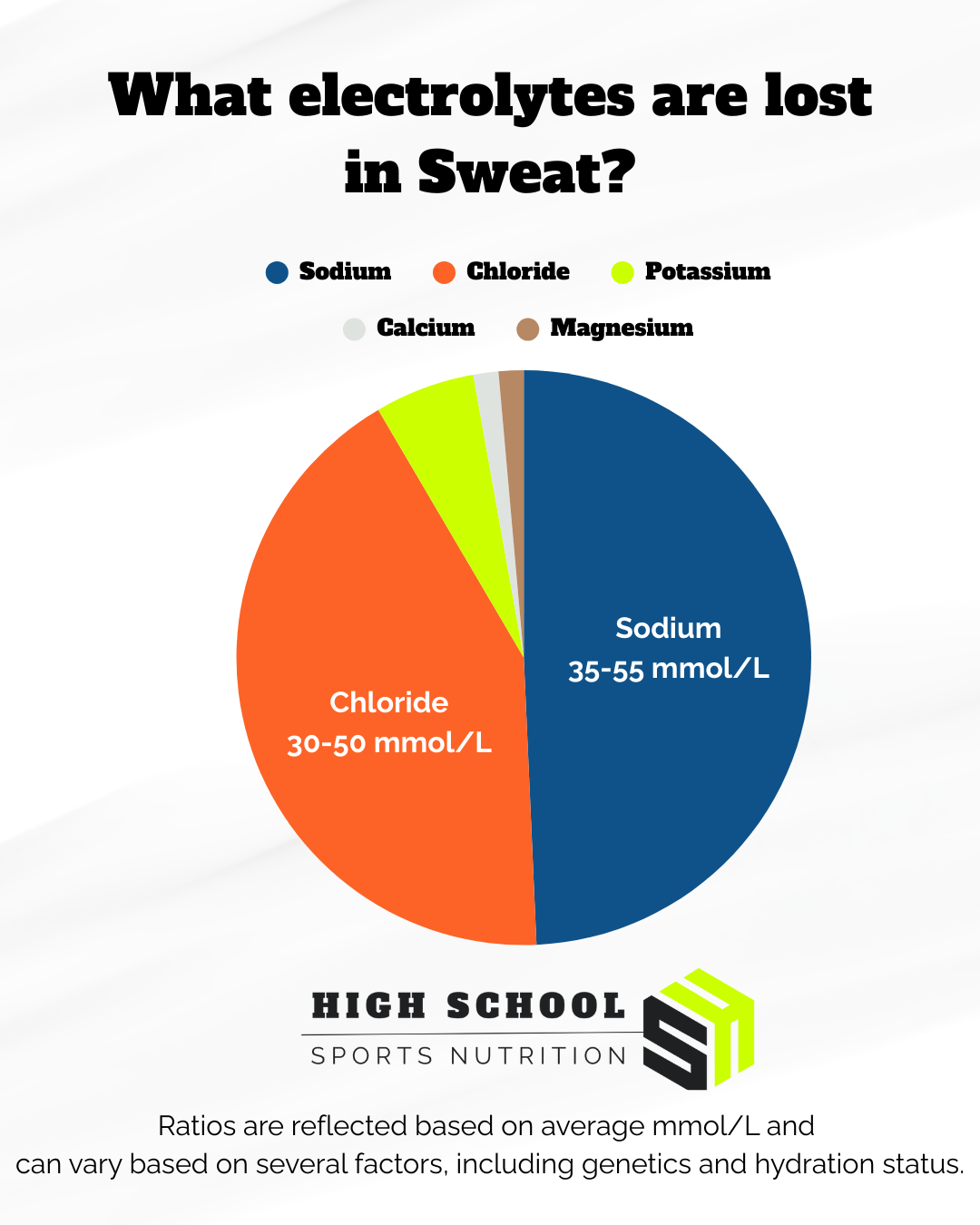
Sweat loss leads to a loss of electrolytes, specifically loss of sodium, chloride, potassium, calcium, and magnesium. This is why consuming electrolytes has many benefits for hydration and performance.
Sodium is the electrolyte lost in the largest quantity, with an average concentration in sweat of 35-50 mmol/L. Chloride has a similar average loss of 30-50 mmol/L. The average loss of potassium in sweat is in the middle, with an average concentration of 4-5 mmol/L. Calcium is lost in a typical concentration of 1-1.3 mmol/L and sweat contains a magnesium concentration of 0.2-1.5 mmol/L. The concentration and ratio of electrolytes lost in an individual's sweat varies depending on many factors, such as genetics, exercise intensity & length, and hydration status [3-5].
Cramping, blood pressure changes, muscle weakness, and dizziness can seriously hinder an athlete's performance, and so consuming electrolytes regularly can help the body remain capable of performing its functions at a high level.
Key Ingredients in Electrolyte Powders
The most important thing about an electrolyte powder is the electrolytes it contains. A quality electrolyte powder contains a combination of sodium, potassium, magnesium, calcium, and phosphorus.
Sodium (Na)
Function: maintains fluid balance, supports nerve and muscle function
Consequences of deficiency: weakness, nausea, headaches, but can increase in severity to include confusion, delirium, and more [6]
How it’s listed on a label: sodium carbonate, sodium bicarbonate, sodium acetate, etc.
Potassium (K)
Function: muscle function/contraction, vital for preventing cramps and fatigue.
Consequences of deficiency: Low potassium levels, called hypokalemia, typically result in muscle weakness, muscle cramps, and fatigue, but more severe cases can lead to cardiac arrhythmias [7].
How it’s listed on a label: potassium chloride, potassium phosphate, potassium bicarbonate, etc.
Magnesium (Mg)
Function: muscle relaxation and recovery, helps reduce the risk of cramps, plays an important role in energy production.
Consequences of deficiency: lethargy, muscle cramps, and muscle weakness. More severe cases can result in seizures and cardiovascular abnormalities [8]
How it’s listed on a label: magnesium oxide, magnesium chloride, magnesium citrate, etc.
Calcium (Ca)
Function: bone strength, necessary for muscle contractions
Consequences of deficiency: tingling or numbness around the mouth, fingers, or toes, muscle spasms, and in severe cases, seizures [9]
How it’s listed on a label: calcium carbonate, calcium chloride, and calcium phosphate, etc.
Phosphorus (P)
Function: cellular metabolism, intracellular signaling
Consequences of deficiency: muscle weakness, fatigue, and in severe cases, rhabdomyolysis [10]
How it’s listed on a label: sodium phosphate, potassium phosphate, etc.
Chloride (Cl-)
Function: maintains fluid balance of the body, vital for acid-base homeostasis
Consequences of deficiency: muscle weakness, lethargy, confusion, and more [11]
How it’s listed on a label: Sodium chloride, potassium chloride, calcium chloride, and magnesium chloride, etc.
Specific brands may choose to highlight just one electrolyte, while others may include specific combinations. Choosing the right electrolyte powder for you is dependent upon your needs.
Ideally, an electrolyte powder will contain monk fruit or stevia for sweetener instead of dextrose (sugar), and some powders also offer additional vitamins, minerals, and/or antioxidants.
Popular vitamins often included in many electrolyte powders are B Vitamins and Vitamin C, since these generally support energy production and immune system health. However, since the form of these vitamins are often not in the best form (ie cyanocobalamin is not a desirable form of B12, but is most often used), it is best to get these elsewhere (in food or a higher quality supplement).
Antioxidants can be a valuable addition to an electrolyte powder, as they reduce the amount of oxidative stress that occurs by neutralizing the free radicals in the body.
Key Ingredients to Avoid in Electrolyte Drinks
- Sugar is an ingredient to avoid in electrolyte drinks for many reasons. While sugar is often included in electrolyte drinks as a quick source of ‘energy’, it can often cause sugar crashes and, in some cases, deplete electrolytes. It is best to get energy from a wholesome pre-workout or pre-competition meal or snack along with sustained sources of energy throughout competition.
- Avoiding artificial sweeteners, however stevia and/or monk fruit is okay for some added sweetness. Artificial sweeteners have been shown to negatively impact the good bacteria in the gut, which can contribute to increased inflammation [12-15].
- Vitamins in unusable forms should be avoided, such as vitamin B12 in the form of cyanocobalamin; a synthetic form of B12.
- Some electrolyte powders may contain caffeine, so be sure to check the label prior to purchasing or consuming. For some athletes, caffeine may be beneficial, but it can also be a source of gastrointestinal issues or the inability to sleep if consumed in the afternoon or evening for others. Some brands may have flavors that contain caffeine and others that are caffeine-free, so be sure to check the label of each flavor.
- Artificial colors and dyes, many of which have negative impacts on neurological performance and should not be used by athletes trying to perform at their peak.
Sugar-Free and Low-Sugar Electrolyte Powder Recommendations
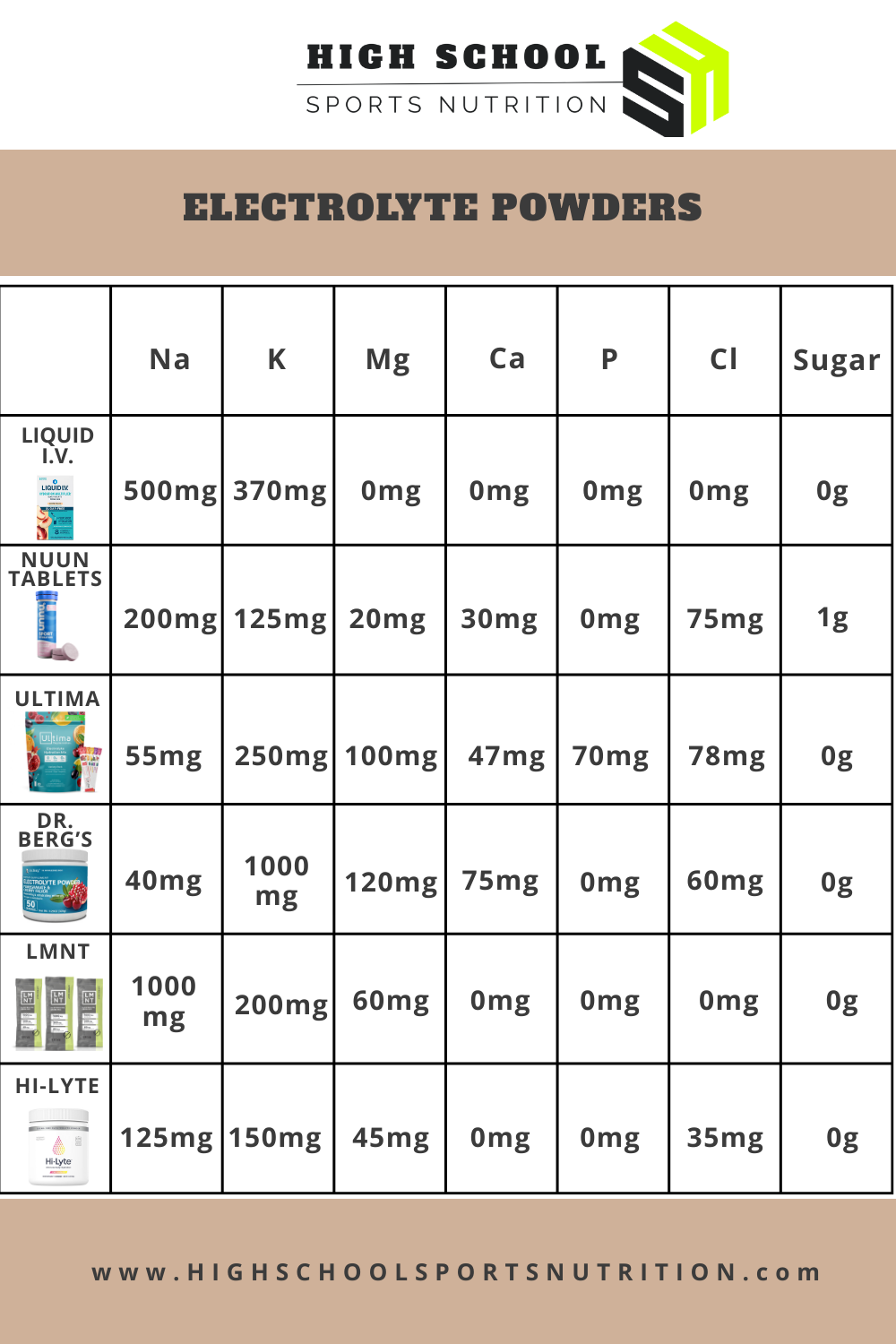
Nuun Sport Electrolyte Tablets |
Key Features | low-sugar electrolytes, travel friendly, tablets easily dissolve in water, vegan, gluten-free
Flavors | orange sunrise, lemon splash, wild strawberry, raspberry lemonade, fresh lime, wild berry, and berry blast
Sugar content | 1g
Electrolyte profile | 200mg Sodium, 125 mg Potassium, 20 mg Magnesium, 75 mg Chloride, and 30 mg Calcium
Other ingredients | Stevia leaf extract
Cost | $0.50-0.75 per serving
Nuun Sport Electrolyte Powder |
Key Features | low sugar electrolytes, vegan, gluten-free
Flavors | orange, lemon lime, mixed berry, pink lemonade, strawberry kiwi
Sugar content | 1g
Electrolyte profile | 300 mg Sodium, 150 mg Potassium, 15 mg Calcium, 25 mg Magnesium, and 40 mg Chloride.
Other ingredients | Stevia leaf extract
Cost | $1.10-1.50 per serving
Ultima Replenisher Electrolyte Hydration Powder |
Key Features | sugar-free electrolytes, clean ingredients, no artificial sweeteners, calorie-free
Flavors | blue raspberry, pink lemonade, passionfruit, cherry pomegranate, grape, lemonade, orange, peach bellini, pina colada, strawberry margarita, cranberry cosmos, raspberry, watermelon, lemon black tea, mango dragon fruit green tea, peach green tea, and strawberry acai green tea
Sugar content | 0g- sweetened with Stevia
Electrolyte profile | 100 mg Magnesium, 47 mg Calcium, 250 mg Potassium, 55 mg Sodium, 78 mg Chloride, and 70 mg Phosphorus
Other ingredients | Vitamin C
Cost | ~ $1.05 per serving
Dr. Berg’s Electrolyte Powder |
Key Features | sugar-free electrolytes, no artificial ingredients, high potassium content to prevent cramps
Flavors | raspberry and lemon, lemonade, orange, strawberry lemonade, pomegranate and cherry, tangerine, and grape
Sugar content | 0g - sweetened with Stevia
Electrolyte profile | 1000mg Potassium, 120 mg Magnesium, 75 mg Calcium, 60 mg Chloride, and 40 mg Sodium
Other ingredients | pink Himalayan salt
Cost | ~$1.15 per serving
LMNT Electrolyte Drink Mix |
Key Features | sugar-free electrolytes, vegan-friendly, gluten-free, no artificial ingredients, high sodium content
Flavors | raspberry, grapefruit, citrus, orange, watermelon, mango chili, chocolate, and unflavored
Sugar content | 0g - sweetened with Stevia
Electrolyte profile | 1000 mg Sodium, 200 mg Potassium, and 60 mg Magnesium
Other ingredients |
Cost | ~$1.88 per serving
Hi-Lyte Electrolyte Supplement |
Key Features | sugar-free electrolytes, vegan-friendly, no artificial ingredients, liquid concentrate
Flavors | Unflavored
Sugar content | 0g
Electrolyte profile | 45 mg Magnesium, 150 mg potassium, 375 mg Chloride, and 125 mg Sodium
Other ingredients | sea minerals
Cost | ~$0.44 per serving
Hi-Lyte Low Sodium Liquid Electrolyte Mix |
Key Features | sugar-free electrolytes, vegan-friendly, no artificial ingredients, liquid concentrate, low sodium content for individuals who need to limit sodium intake
Flavors | unflavored
Sugar content | 0g - sweetened with Stevia
Electrolyte profile | 45 mg Magnesium, 450 mg Chloride, 5 mg Sodium, 150 mg Potassium
Other ingredients | sea minerals
Cost | ~$0.44 per serving
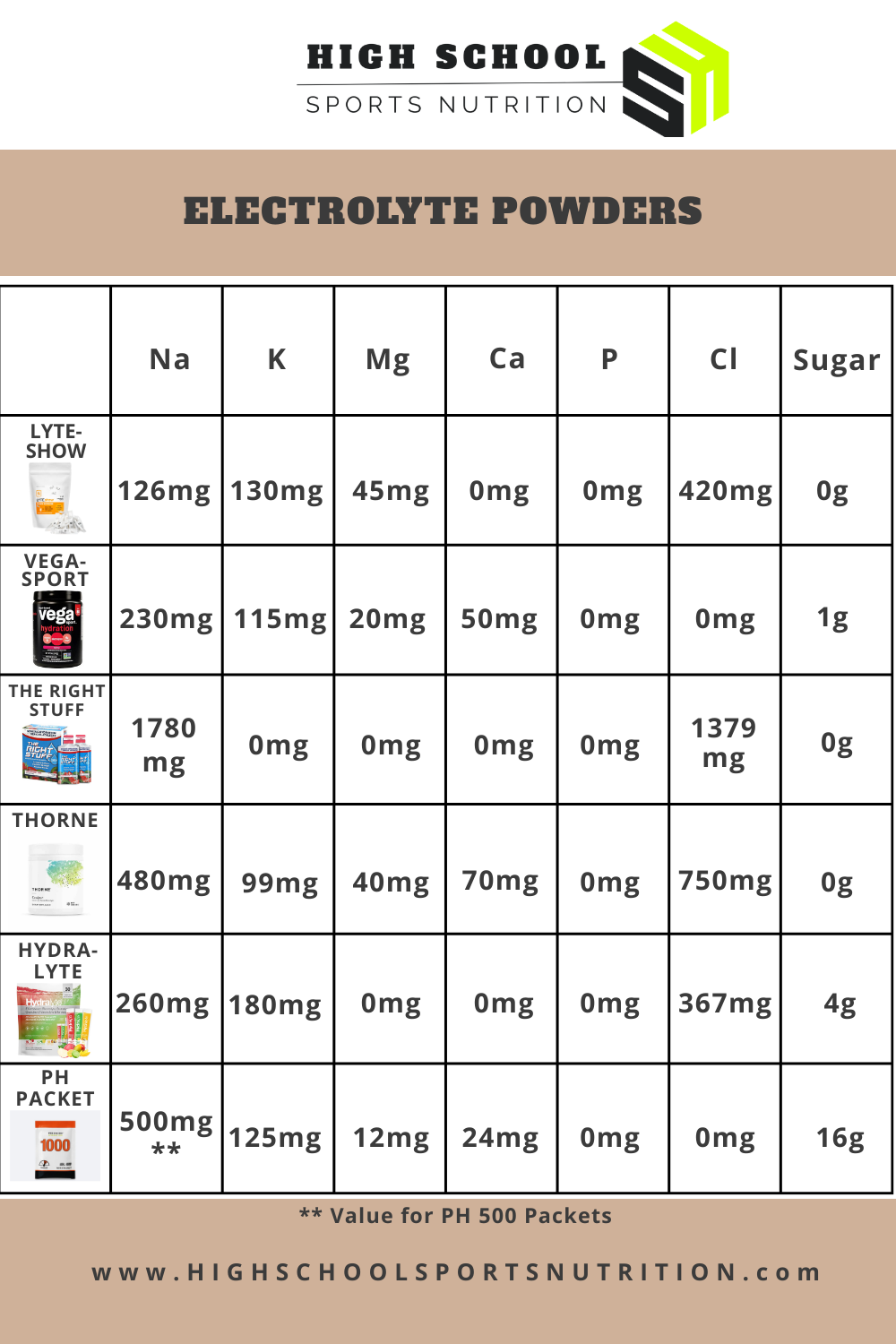
LyteShow Electrolyte Concentrate |
Key Features | sugar-free electrolytes, no artificial sweeteners, gluten-free, vegan-friendly, liquid concentrate
Flavors | unflavored
Sugar content | 0g
Electrolyte profile | 40 mg Magnesium, 320 mg Chloride, 150 mg Sodium, and 100 mg Potassium
Other ingredients | seawater, zinc for immune support
Cost | ~$0.33-$0.50 per serving
LyteShow Single Serving Paks |
Key Features | sugar-free electrolytes, no artificial sweeteners, gluten-free, easy to carry in bags, etc.
Flavors | unflavored
Sugar content | 0g
Electrolyte profile | 40 mg Magnesium, 320 mg Chloride, 150 mg Sodium, and 100 mg Potassium
Other ingredients | seawater, zinc for immune support
Cost | ~$0.33-$0.50 per serving
LYTEcaps |
Key Features | sugar-free electrolytes, no artificial sweeteners, gluten-free, vegan-friendly, travel-friendly tablets
Flavors | Unflavored
Sugar content | 0g
Electrolyte profile | 40 mg Magnesium, 320 mg Chloride, 150 mg Sodium, and 100 mg Potassium
Other ingredients | zinc for immune support
Cost | ~$0.28 per serving
Vega Sport Electrolyte Hydrator |
Key Features | sugar-free electrolytes, no artificial sweeteners, gluten-free, vegan-friendly, plant-based
Flavors | berry and lemonade
Sugar content | 0g - sweetened with coconut water and stevia
Electrolyte profile | 230 mg Sodium, 115 mg Potassium, 50 mg. Calcium, and 20 mg Magnesium
Other ingredients | 60 mg Vitamin C
Cost | ~$0.46 per serving
The Right Stuff Electrolyte Concentrate |
Key Features | sugar-free electrolytes, gluten-free, good for heavy sweaters, single serve liquid concentrate
Flavors | berry blend, peach mango, fruit punch, grape, lemon-lime, orange tangerine, strawberry kiwi, and strawberry lemonade
Sugar content | 0g - sweetened with stevia and monk fruit extract
Electrolyte profile | 1780 mg Sodium and 1,379 mg Chloride
Other ingredients |
Cost | ~$3.20 per serving
Thorne Electrolyte Powder |
Key Features | sugar-free electrolytes, gluten-free, free from artificial sweeteners
Flavors | blood orange, mango limeade, and watermelon
Sugar content | 0g. - sweetened with stevia
Electrolyte profile | 70 mg. Calcium, 40 mg. Magnesium, 750 mg. Chloride, 480 mg. Sodium, 99 mg. Potassium
Other ingredients |
Cost | ~$1.33 per serving
Hydralyte Electrolyte Powder |
Key Features | low-sugar electrolytes, fizzy, gluten-free, small amount of sugar to accelerate water absorption
Flavors | strawberry lemonade, orange, and limeade
Sugar content | 4g.
Electrolyte profile | 260 mg. Sodium 180 mg. Potassium, and 367 mg. Chloride
Other ingredients | stevia leaf extract
Cost | ~$1.07 per serving
PH 500 |
Key Features | gluten-free, vegan-friendly, free of artificial sweeteners, designed for light/moderate sweaters
Flavors | mild citrus
Sugar content | 17g
Electrolyte profile | 250 mg Sodium, 125 mg Potassium, 24 mg Calcium, and 12 mg Magnesium
Other ingredients |
Cost | ~$1.56-$1.75 per serving
PH 1000 |
Key Features | gluten-free, vegan-friendly, free of artificial sweeteners, designed for moderate sweaters
Flavors | mild citrus
Sugar content | 16g
Electrolyte profile | 500 mg Sodium, 125 mg Potassium, 24 mg Calcium, and 12 mg Magnesium
Other ingredients |
Cost | ~$1.56-$1.75 per serving
PH 1500 |
Key Features | gluten-free, vegan-friendly, free of artificial sweeteners, designed for heavy sweaters
Flavors | mild citrus
Sugar content | 15g
Electrolyte profile | 750 mg Sodium, 125 mg Potassium, 24 mg Calcium, and 12 mg Magnesium
Other ingredients |
Cost | ~$1.56-$1.75 per serving
PH Electrolyte Tablets |
Key Features | low-sugar electrolytes, gluten-free, vegan-friendly, free of artificial sweeteners, choices for sodium content, travel-friendly
Flavors | mild citrus
Sugar content | 1-3g
Electrolyte profile | 125 mg Potassium, 24 mg Calcium, 12 mg Magnesium, and various sodium content choices: 125 mg, 250 mg, 500 mg, or 750 mg depending on sweat level
Other ingredients |
Cost | ~$1.08-$1.20 per serving
Sugar-Free Liquid I.V. Drink Mix |
Key Features | sugar-free electrolytes, gluten-free, vegan-friendly, no artificial sweeteners
Flavors | white peach, lemon lime, raspberry melon, green grape, raspberry lemonade, mango pineapple, and rainbow sherbert
Sugar content | 0g. - sweetened with stevia
Electrolyte profile | 500-510 mg Sodium and 370-380 mg Potassium
Other ingredients | stevia leaf extract, 62 mg vitamin C
Cost | ~ $1.25 per serving 
How Do Sports Drinks Compare?
When people think of electrolyte drinks, they typically think of a few common sports drinks. How do common sports drinks compare to the electrolyte recommendations we listed above? Let’s take a look!
Many people know and love Gatorade products because of their great taste and wide variety of flavor availability. Although the flavor variety is great, their electrolyte content is fairly weak; 270 mg Sodium and 80 mg Potassium in a 20 fl oz. bottle. Compared to the powders we included above, these sports drinks do not contain a wide range of electrolytes, which for some individuals would be fine. Another important note: regular Gatorade flavors contain 34g of added sugars and are 140 calories per 20 fl oz. They do offer zero sugar options with the same electrolyte content; however, they contain artificial sweeteners.
Another popular sports drink brand is Powerade. Powerade contains 400 mg Sodium and 130 mg Potassium in a 20 fl oz. serving. Once again, there is not a wide range of electrolytes included in these drinks, however there is a higher content of Sodium and Potassium than in Gatorade. Powerade contains cyanocobalamin, as well as artificial sweeteners in their zero sugar version. Their regular sugar drink contains 130 calories and 34g of added sugars.
BodyArmor is a newer sports drink that many believe to be a better option than the typical sports drink options. In a 16 fl oz. serving there is 680 mg Potassium and 30mg Sodium. As previously mentioned with the other sports drinks, there is not a great variety of electrolytes in these drinks, and there are 27g of added sugars, 110 calories, and vitamins in unusable forms. BodyArmor’s Lyte drinks are 15 calories per 12 fl oz. serving and contain no artificial sweeteners, which sets them apart from other popular zero-sugar sports drinks.
Popular sports drinks contain some electrolytes, however for a more well-rounded drink, you may want to consider one of the electrolyte powders listed above. Regular sports drinks are high in sugar and calories, and many of their zero-sugar options contain artificial sweeteners.
When Should You Consume Electrolyte Powders?
The timing of when to consume electrolytes is just as important as which electrolyte you are drinking.
Mixing a serving of electrolyte powder into a water bottle to consume during exercise, including the 30-minute window before and after exercise can help to prevent cramps and replenish electrolytes as you lose them. Replenishing electrolytes post-workout can aid in recovery and rehydration of the athlete.
If consuming flavored drinks during exercise causes discomfort, then consuming electrolytes after their workout is complete is the best option.
Electrolyte powders and tablets are easy to bring with you on the go, so keeping some in your gym bag, practice backpack, or locker allows you to have access to electrolytes whenever needed.
Potential Side Effects and Considerations
Overconsumption of electrolytes can be dangerous and lead to serious consequences. Too much of a specific electrolyte can lead to concerning health issues. For example, too much sodium can lead to high blood pressure, and in severe cases, may contribute to heart failure. Excessive amounts of electrolytes can present itself in many ways, such as cardiac arrhythmias, abdominal pain, secondary organ dysfunction, and more [16].
Prior health issues can potentially be dangerous if caution is not taken when consuming electrolytes. Kidney issues are a great cause of concern, since they are the primary organs responsible for electrolyte balance via filtration and excretion.
Some medications may interfere with electrolyte balance, such as drugs used for hypertension, pain/inflammation, autoimmune diseases, and more [17]. Discussing concerns with your doctor or dietitian prior to electrolyte consumption is the best approach to ensuring that there are no potential issues.
Digestive discomfort is another potential side effect of electrolyte consumption. If you commonly struggle with digestive issues, introducing electrolytes in small doses and slowly working your way up to the full dose can help to prevent digestive issues. Choosing products with natural ingredients and no artificial additives can minimize digestive side effects while consuming electrolytes.
Conclusion
Electrolytes are vital to the general function of the human body, but they are also extremely important for individuals and athletes that want to perform at the top of their game. Electrolyte imbalances or deficiencies can have serious consequences, so consuming electrolytes regularly can help ensure you are providing your body with what it needs to function well.
There are many different electrolyte powders and drinks available in stores and online, so consider your individual needs before purchasing. There are electrolytes for everyone - many different flavors, sweeteners, electrolyte content, and prices.
Consider reviewing the powders listed in this article, as there is a wide variety included that should suit all different needs.
Remember: staying hydrated and keeping your body in balance is important, especially during practices or workouts.
RESOURCES
- Electrolyte Panel: MedlinePlus Medical Test. Accessed February 4, 2026. https://medlineplus.gov/lab-tests/electrolyte-panel/
- Tebben PJ. Hypophosphatemia: A Practical Guide to Evaluation and Management. Endocr Pract. 2022 Oct;28(10):1091-1099. doi: 10.1016/j.eprac.2022.07.005. Epub 2022 Aug 6. PMID: 35940468. Hypophosphatemia: A Practical Guide to Evaluation and Management - PubMed
- Baker LB, Wolfe AS. Physiological mechanisms determining eccrine sweat composition. Eur J Appl Physiol. 2020 Apr;120(4):719-752. doi: 10.1007/s00421-020-04323-7. Epub 2020 Mar 2. PMID: 32124007; PMCID: PMC7125257. Physiological mechanisms determining eccrine sweat composition - PubMed
- Shirreffs SM, Maughan RJ. Whole body sweat collection in humans: an improved method with preliminary data on electrolyte content. J Appl Physiol (1985). 1997 Jan;82(1):336-41. doi: 10.1152/jappl.1997.82.1.336. PMID: 9029235. Whole body sweat collection in humans: an improved method with preliminary data on electrolyte content - PubMed
- Baker LB, De Chavez PJD, Ungaro CT, Sopeña BC, Nuccio RP, Reimel AJ, Barnes KA. Exercise intensity effects on total sweat electrolyte losses and regional vs. whole-body sweat [Na+], [Cl-], and [K+]. Eur J Appl Physiol. 2019 Feb;119(2):361-375. doi: 10.1007/s00421-018-4048-z. Epub 2018 Dec 6. PMID: 30523403; PMCID: PMC6373370. Exercise intensity effects on total sweat electrolyte losses and regional vs. whole-body sweat [Na+], [Cl-], and [K+] - PubMed
- Adrogué HJ, Tucker BM, Madias NE. Diagnosis and Management of Hyponatremia: A Review. JAMA. 2022;328(3):280–291. doi:10.1001/jama.2022.11176 Diagnosis and Management of Hyponatremia: A Review | Acid Base, Electrolytes, Fluids | JAMA | JAMA Network
- Kim MJ, Valerio C, Knobloch GK. Potassium Disorders: Hypokalemia and Hyperkalemia. Am Fam Physician. 2023 Jan;107(1):59-70. PMID: 36689973. Potassium Disorders: Hypokalemia and Hyperkalemia - PubMed
- Touyz RM, de Baaij JHF, Hoenderop JGJ.Magnesiu, Disorders. The New England Journal of Medicine. 2024;390(21):1998-2009. doi:10.1056/NEJMra1510603. Magnesium Disorders | New England Journal of Medicine
- Bove-Fenderson E, Mannstadt M. Hypocalcemic disorders. Best Pract Res Clin Endocrinol Metab. 2018 Oct;32(5):639-656. doi: 10.1016/j.beem.2018.05.006. Epub 2018 May 28. PMID: 30449546. Hypocalcemic disorders - PubMed
- Subramanian R, Khardori R. Severe hypophosphatemia. Pathophysiologic implications, clinical presentations, and treatment. Medicine (Baltimore). 2000 Jan;79(1):1-8. doi: 10.1097/00005792-200001000-00001. PMID: 10670405. Severe hypophosphatemia. Pathophysiologic implications, clinical presentations, and treatment - PubMed
- Signorelli GC, Bianchetti MG, Jermini LMM, Agostoni C, Milani GP, Simonetti GD, Lava SAG. Dietary Chloride Deficiency Syndrome: Pathophysiology, History, and Systematic Literature Review. Nutrients. 2020 Nov 9;12(11):3436. doi: 10.3390/nu12113436. PMID: 33182508; PMCID: PMC7696598. Dietary Chloride Deficiency Syndrome: Pathophysiology, History, and Systematic Literature Review - PubMed
- Debras C, Chazelas E, Sellem L, Porcher R, Druesne-Pecollo N, Esseddik Y, de Edelenyi FS, Agaësse C, De Sa A, Lutchia R, Fezeu LK, Julia C, Kesse-Guyot E, Allès B, Galan P, Hercberg S, Deschasaux-Tanguy M, Huybrechts I, Srour B, Touvier M. Artificial sweeteners and risk of cardiovascular diseases: results from the prospective NutriNet-Santé cohort. BMJ. 2022 Sep 7;378:e071204. doi: 10.1136/bmj-2022-071204. PMID: 36638072; PMCID: PMC9449855. Artificial sweeteners and risk of cardiovascular diseases: results from the prospective NutriNet-Santé cohort - PubMed
- Debras C, Deschasaux-Tanguy M, Chazelas E, Sellem L, Druesne-Pecollo N, Esseddik Y, Szabo de Edelenyi F, Agaësse C, De Sa A, Lutchia R, Julia C, Kesse-Guyot E, Allès B, Galan P, Hercberg S, Huybrechts I, Cosson E, Tatulashvili S, Srour B, Touvier M. Artificial Sweeteners and Risk of Type 2 Diabetes in the Prospective NutriNet-Santé Cohort. Diabetes Care. 2023 Sep 1;46(9):1681-1690. doi: 10.2337/dc23-0206. PMID: 37490630; PMCID: PMC10465821. Artificial Sweeteners and Risk of Type 2 Diabetes in the Prospective NutriNet-Santé Cohort - PubMed
- Diaz C, Rezende LFM, Sabag A, Lee DH, Ferrari G, Giovannucci EL, Rey-Lopez JP. Artificially Sweetened Beverages and Health Outcomes: An Umbrella Review. Adv Nutr. 2023 Jul;14(4):710-717. doi: 10.1016/j.advnut.2023.05.010. Epub 2023 May 13. PMID: 37187453; PMCID: PMC10334147. Artificially Sweetened Beverages and Health Outcomes: An Umbrella Review - PubMed
- Kossiva L, Kakleas K, Christodouli F, Soldatou A, Karanasios S, Karavanaki K. Chronic Use of Artificial Sweeteners: Pros and Cons. Nutrients. 2024 Sep 19;16(18):3162. doi: 10.3390/nu16183162. PMID: 39339762; PMCID: PMC11435027. Chronic Use of Artificial Sweeteners: Pros and Cons - PubMed
- Razzaque MS, Wimalawansa SJ. Minerals and Human Health: From Deficiency to Toxicity. Nutrients. 2025 Jan 26;17(3):454. doi: 10.3390/nu17030454. PMID: 39940312; PMCID: PMC11820417. Minerals and Human Health: From Deficiency to Toxicity - PubMed
- Buckley MS, Leblanc JM, Cawley MJ. Electrolyte disturbances associated with commonly prescribed medications in the intensive care unit. Crit Care Med. 2010 Jun;38(6 Suppl):S253-64. doi: 10.1097/CCM.0b013e3181dda0be. PMID: 20502178. Electrolyte disturbances associated with commonly prescribed medications in the intensive care unit - PubMed
